


Your tattoo doesn't look quite as good as it used to. The colours seem softer, the lines less defined, and something about it looks a little dull. But is the ink actually fading, or could your skin be part of the problem?
We've all seen it. A tattoo that looked incredible when it was fresh doesn't quite have the same impact a few years down the line. Maybe it's been five years. Maybe fifteen. So, can you actually bring an old tattoo back to life?
The answer is yes and no. And the difference matters.
First, let's talk about where your tattoo actually lives.
Here's something worth knowing: tattoo ink isn't sitting on the surface of your skin. It's deposited primarily in the dermis, the layer beneath the epidermis.
In fact, a 2018 study published in the Journal of Experimental Medicine explored how immune cells called macrophages capture and retain tattoo pigment. The researchers found that pigment can be released and recaptured as these cells are replaced, helping explain why tattoos remain visible for years.
Read the research: Journal of Experimental Medicine
And that's an important distinction.
Your skincare works primarily on the skin. It doesn't replace the tattoo pigment underneath.
So if your ink has genuinely faded or the lines have lost definition, no moisturiser, serum, or body oil can put that missing pigment back.
But that doesn't mean there's nothing you can do.

Your tattoo might not be the only thing looking dull.
Here's where things get interesting. Your skin is constantly changing. It loses moisture, sheds cells and responds to everything from the weather to your daily routine. And all of that can affect how your tattoos look. Dry skin can appear rougher, flakier, and less luminous. When that happens over a tattoo, the design can appear duller too. There's actual science behind this.
A study published in Skin Research and Technology examined how hydration changes the optical properties of skin. The researchers found that moisturised skin scattered less light at its surface and became more translucent.
In simpler terms, hydration changes the way light travels through and reflects from your skin.
Read the study: Appearance Benefits of Skin Moisturization
The study wasn't specifically about tattoos, but it helps explain something many tattooed people recognise: the same tattoo can look noticeably different depending on the condition of the skin covering it.
Sometimes, it's not the ink that needs attention. It's the skin it lives in.
So, what can skincare actually do?
Let's separate what skincare can improve from what it can't.
01. Exfoliate away surface dullness
Dead skin cells naturally accumulate on the surface before being shed. Gentle exfoliation can help remove some of that surface build-up, leaving healed skin feeling smoother and looking fresher.
For tattooed skin, that can mean a clearer-looking surface over the design.
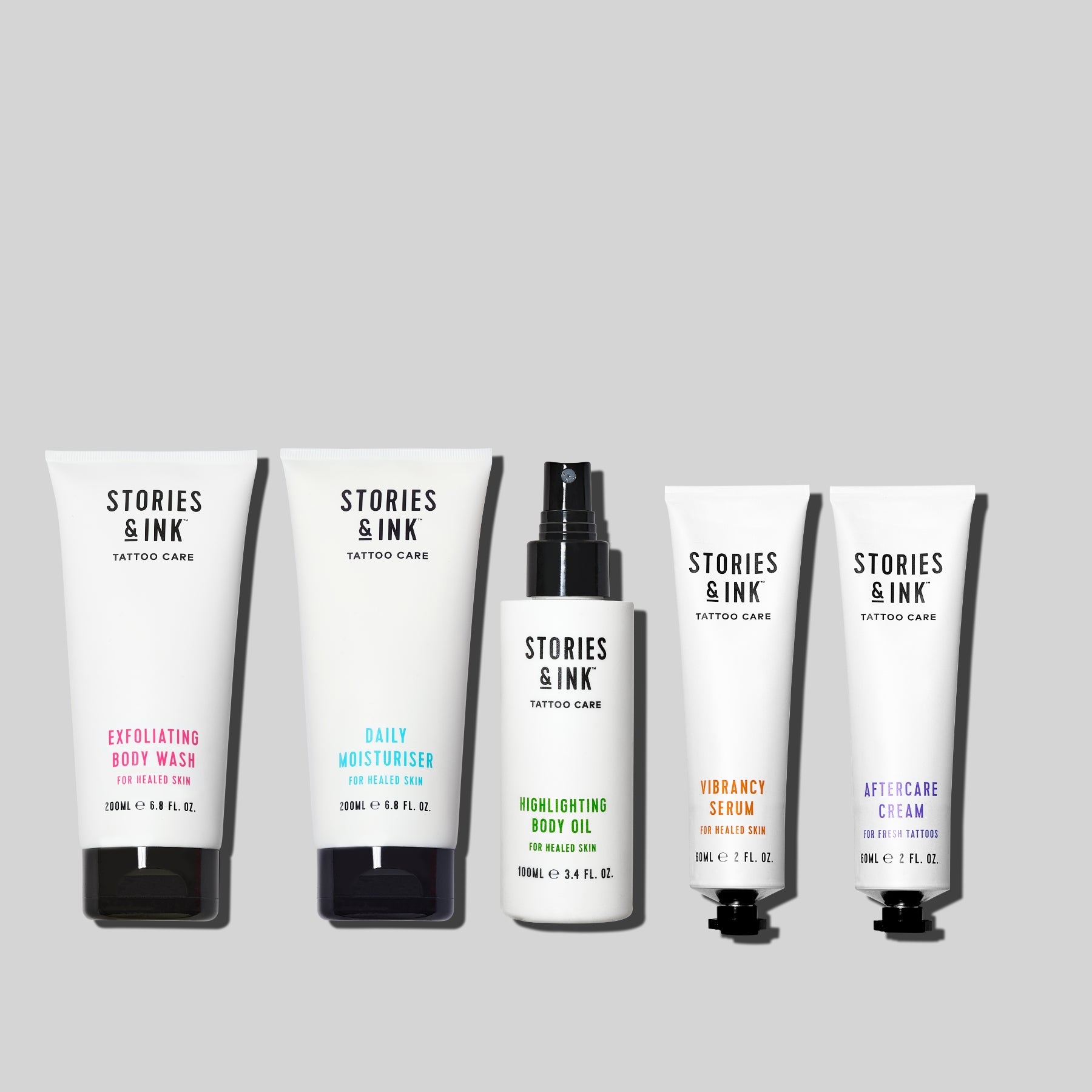
Our Exfoliating Body Wash is designed to cleanse and gently exfoliate healed tattooed skin as part of your shower routine.
But remember: exfoliation doesn't remove fading or restore lost pigment. And it should never be used on a fresh or healing tattoo.
02. Keep the skin hydrated
This is probably the simplest place to start. Moisturising helps improve the condition and appearance of dry skin. And as the research suggests, hydrated skin interacts with light differently from dehydrated skin.
The American Academy of Dermatology specifically recommends applying a water-based lotion or cream when tattooed skin feels dry.
Read the dermatologist's guidance
A Daily Moisturiser can help keep healed tattooed skin feeling soft, comfortable and hydrated. No magic. Just consistent skincare.
03. Enhance how your tattoos look
This is where products like Vibrancy Serum and Highlighting Body Oil come in. They don't change the ink beneath your skin. Instead, they're designed to improve the appearance of the skin around and over your tattoos.
Think hydration, a smoother-looking surface, and a little extra luminosity. The result? Tattoos that can look more defined and vibrant, even though the pigment itself hasn't changed. That's the difference between restoring a tattoo and enhancing its appearance.
And it's one worth understanding.

What about tattoos that have genuinely faded?
Unfortunately, skincare has its limits. If a tattoo has lost pigment, its colours have permanently changed, or its lines have blurred, topical skincare can't reverse those changes.
A professional touch-up may be an option, depending on the tattoo and the condition of your skin.
And if you're thinking about keeping your existing ink looking its best for longer, there's another important factor: the sun.
The American Academy of Dermatology warns that ultraviolet light can fade certain tattoo inks and recommends broad-spectrum, water-resistant SPF 30 or higher when tattooed skin is exposed to sunlight.
So while a good skincare routine can improve the appearance of the skin, sun protection remains an important part of long-term tattoo care.
The Tattoo Truth
Can you revive an old tattoo? You can't bring back pigment that's genuinely gone. You can't moisturise blurred lines back into focus. But you can look after the skin your tattoo lives in.
And when that skin is smoother, hydrated and healthier-looking, your tattoos can look better too.
That's not reversing time.
It's giving your tattoos the care they deserve, however old they are.
Your tattoos aren't new. Your routine can be.
Exfoliate. Hydrate. Enhance. Discover skincare made for healed tattoos, whether they're two months or twenty years old.