


The short answer: Rest for at least the first 48 hours after a tattoo. From around day 3 you can train lightly as long as nothing rubs, stretches or sweats heavily over the new piece. Save hard sessions on the tattooed area for week two, and swimming, saunas and contact sports for when it's fully healed at 2 to 3 weeks.
Nobody wants to hear it mid-programme, but here it is: the squat rack will still be there next week. Your new tattoo, on the other hand, gets exactly one healing window, and a sweaty gym session at the wrong moment is one of the easier ways to mess it up.
The internet answers this question with everything from "same day is fine" to "a month off, minimum", which is how you know most of it is guessing. The real answer depends on three things: how fresh the tattoo is, where it sits on your body, and what kind of training you're asking it to survive. Here's the honest breakdown.
Key takeaways
- First 48 hours: rest. Your tattoo is an open wound and your only job is aftercare.
- From day 3, light training is fine if the tattooed area stays dry-ish, friction-free and unstretched. Train around the piece, not on it.
- Sweat itself doesn't dissolve ink, but sweat plus bacteria plus friction on broken skin is how irritation and infections happen. Gyms are not sterile places.
- Swimming, saunas, steam rooms and contact sports wait until fully healed: 2 to 3 weeks, once all flaking, scabbing and redness have completely settled.
- If you train, wash the tattoo as soon as you're done: fragrance-free cleanser, pat dry, thin layer of aftercare cream.

The training timeline after a tattoo
| When | Green light | Hold off |
|---|---|---|
| First 48 hours | Walking, stretching that doesn't pull the tattoo, life admin | All proper training. Everything. |
| Days 3 to 7 | Light sessions away from the tattoo: easy cardio, upper body work with a fresh leg piece and vice versa | Heavy sweating, anything rubbing or stretching the tattooed skin, tight kit over the piece |
| Week 2 | Most normal training if the tattoo is flaking calmly and nothing aggravates it | Max-effort work directly on the area, bar or strap contact across the piece |
| Fully healed (2 to 3 weeks) | Everything: swimming, saunas, contact sports, full sessions | Nothing, you're back. Just add SPF outdoors |
Fully healed means exactly that: all swelling, redness, itching, flaking and scabbing completely gone. If in doubt, it's not healed. Your artist's instructions always override the general timeline, especially for large or heavily saturated pieces.
Placement decides more than the calendar
A forearm piece and back day can coexist from day 3 without drama. A fresh elbow, knee, ribs or armpit tattoo is a different conversation, because those areas crease, stretch and sweat with almost everything you do.
The question to ask before any exercise: does this movement stretch, compress or rub the tattooed skin? Skin that's constantly flexing cracks its healing surface, and cracked healing is how solid black turns patchy. So with fresh ink on your thigh, it's an upper body week. Sternum piece, skip the bench. Full sleeve just finished, congratulations, it's leg week after all. Train around the tattoo and you barely lose momentum.
What sweat actually does to a new tattoo
Let's kill the myth first: sweat does not leach ink out of your skin. Your tattoo sits in the dermis, below the sweat glands' exit route. What sweat does do is soften the healing surface, sting like mad, and act as a delivery system for bacteria into skin that hasn't closed yet.
And that's the real issue: the gym itself. Shared benches, barbells, mats and pads carry other people's bacteria, and a fresh tattoo is an open door. The combination of heavy sweat, friction and communal equipment is exactly how healing tattoos end up irritated or worse. If you notice increasing redness, heat or swelling after training, take it seriously: here's how to know if your tattoo is infected.
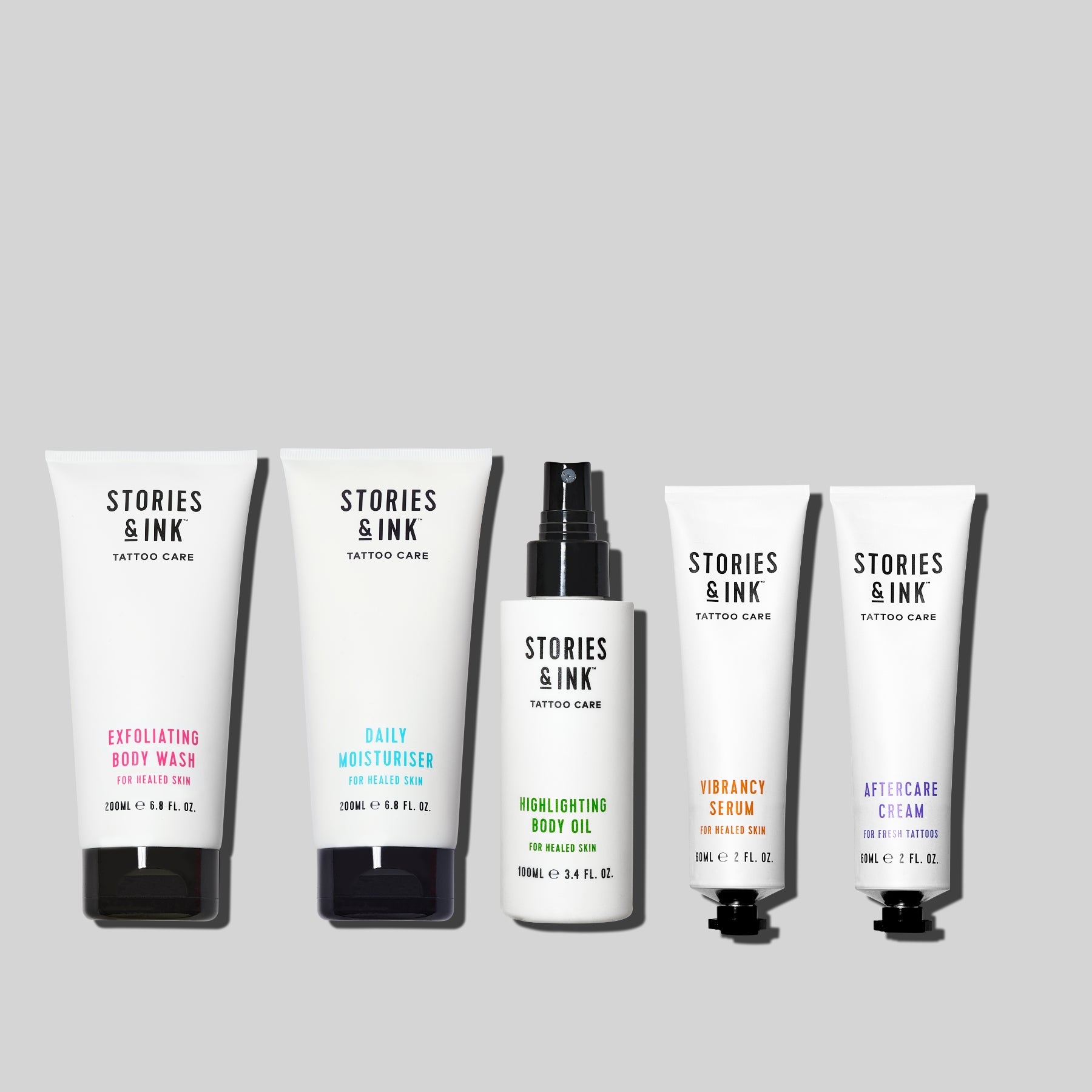
The protocol if you do train: cover the tattoo loosely, don't let it press on shared surfaces, and wash it as soon as the session ends. Lukewarm water, a fragrance-free wash like the Aftercare Foam Cleanser, pat dry with clean paper towel, then a thin layer of Aftercare Cream. Sweat sitting on fresh ink for hours is the avoidable part.
Training with second skin on
If your artist wrapped you in healing film, you've got a small head start: the tattoo is sealed off from gym bacteria while the film holds. The catch is that heavy sweat is the natural enemy of the adhesive, and a lifted edge turns your sterile seal into a warm little pocket of exactly what you don't want.
Light training with film on is fine. Sweat-soaked sessions are pushing your luck. If the edges lift or fluid starts leaking, the film comes off and you switch to open healing, which we've covered step by step in the second skin guide.

Contact sports, mats and grappling
BJJ, MMA, boxing, rugby, anything involving mats and other people's skin: this is the strictest category, and every grappler already knows why. Mats are a famously efficient way to share staph and ringworm even with intact skin. Dragging a healing tattoo across them, under friction, at full intensity, is asking for an infection and a wrecked piece in the same session.
Fully healed before you're back on the mats, no exceptions, and a few extra days beyond "probably fine" costs you nothing. Fighters sit out for cuts all the time. A tattoo is a few thousand of them, arranged nicely.
Pools, saunas and the recovery suite
The post-workout swim, sauna, steam room and ice bath are all on the healed-only list. Soaking softens and breaks down healing skin, pools and hot tubs are chemical-and-bacteria soups, and heat plus heavy sweat undoes careful aftercare in twenty minutes. The full reasoning lives in new tattoos and swimming. Shower, wash, cream, done.
Protect the work you sat for
Once you're healed and back to full training, only two things still matter. Friction from straps, sleeves and gear over the same spot for years can slowly wear at healed ink, so rotate where things sit if you can. And if you train outdoors, the sun will do more damage in one summer than the gym ever will: here's the full guide to sun and SPF for tattoos. Keep the routine simple with the Tattoo Aftercare Duo while healing, and a daily tattoo moisturiser once you're through it.
Frequently asked questions
How long after a tattoo can you work out?
Rest completely for the first 48 hours. From around day 3, light training is fine as long as nothing rubs, stretches or heavily sweats over the tattoo. Most normal training resumes in week two if healing is calm, and swimming, saunas and contact sports wait until fully healed at 2 to 3 weeks.
Can I lift weights with a new tattoo?
After the first couple of days, yes, if the session doesn't involve the tattooed area. The test is simple: does the movement stretch, compress or rub the tattoo, or press it against a bench, bar or strap? If yes, swap the exercise or train a different body part until the skin has settled.
Will sweat ruin my new tattoo?
Sweat doesn't pull ink out, your tattoo sits deeper than that. The risk is sweat softening healing skin and carrying gym bacteria into an open wound, which causes irritation and can lead to infection. If you train, wash the tattoo with a fragrance-free cleanser as soon as you finish and reapply a thin layer of aftercare cream.
Can I go to the gym with second skin on?
Light sessions, yes: the film seals the tattoo off from shared equipment while it holds. Heavy sweating is the problem, because it lifts the adhesive, and a lifted edge lets moisture and bacteria underneath. If the film leaks or peels, remove it properly and switch to open healing with a cleanser and cream routine.
When can I do BJJ, MMA or contact sports after a tattoo?
Only once the tattoo is fully healed, at 2 to 3 weeks minimum, with all scabbing and flaking completely gone. Mats and skin-to-skin contact are efficient ways to pick up staph and other infections through broken skin, and friction at full intensity can permanently damage healing ink. Give it the extra few days.
Can I swim or use the sauna after training with a new tattoo?
No. Pools, hot tubs, saunas, steam rooms and ice baths all wait until the tattoo is fully healed. Soaking breaks down healing skin, and pool and spa environments carry chemicals and bacteria that don't belong anywhere near an open wound. Stick to quick showers until every stage of healing is done.
Does working out fade tattoos?
No. Exercise, sweating and muscle growth don't fade healed tattoos, and normal training won't blur a properly healed piece. The genuine long-term risks are constant gear friction over the same spot and, far bigger, unprotected sun during outdoor training. Broad-spectrum SPF on exposed ink solves the one that matters.
Should I wash my tattoo after the gym?
Yes, as soon as possible after the session. Lukewarm water and a gentle fragrance-free cleanser to clear sweat and bacteria, pat dry with clean paper towel, then a thin layer of fragrance-free aftercare cream. Don't let a sweaty tattoo sit under clothing for the rest of the day.
Stories & Ink is a UK tattoo skincare brand: fragrance-free, vegan aftercare for fresh tattoos, and a dedicated Maintenance range that keeps healed ink vibrant. Artist-approved and used by studios and collectors worldwide. Questions? info@storiesandink.com