


Yes. Sun exposure is the number one cause of tattoo fading. Never put sunscreen on a new, unhealed tattoo: keep it covered and out of the sun instead. Once fully healed (2 to 3 weeks), protect it with broad-spectrum SPF 30 to 50 whenever it sees sun, reapplied every two hours.
The sun doesn't care how much your sleeve cost. It doesn't care that you sat through eight hours for it, or that it's healed beautifully, or that the blacks are so deep your mates keep asking who did it. Give it enough unprotected afternoons and it will quietly turn all of that into a softer, blurrier, grey-er version of itself.
The good news: fade from sun is the most preventable kind there is. Here's exactly what UV does to ink, the rules for fresh versus healed tattoos, and the habits that keep a piece looking like it was done last year instead of last decade.
Key takeaways
- UV light breaks tattoo pigment into smaller fragments that your immune system clears away. That's fading, and the sun does it faster than anything else.
- Fresh tattoos and sunscreen don't mix. Until your tattoo is fully healed, the only sun protection is shade and loose clothing.
- On healed tattoos, use broad-spectrum SPF 30 to 50 and reapply every two hours in direct sun. The best sunscreen for tattoos is the one you'll actually reapply.
- UVA passes through clouds and window glass, so protection is a daily habit, not just a beach day thing.
- Sunbeds are the fast-forward button on fading. Keep your ink out of them.
Does the sun actually fade tattoos? Here's the science
Your tattoo lives in the dermis, the second layer of skin, where pigment particles are too large for your immune system to carry away. That's why tattoos are permanent.
UV light changes the maths. When sunlight hits tattooed skin, UVA rays penetrate deep into the dermis and break those pigment particles into smaller fragments. Small enough, suddenly, for your immune cells to pick up and remove. Every unprotected sun session breaks a little more pigment down, and your body tidies a little more of your tattoo away. Meanwhile UVB damages the surface, degrading the skin your tattoo sits under, so lines soften and contrast drops.
It happens to every colour, but not evenly. Black is the most stable pigment and still slowly shifts towards grey, while yellows, pastels and some reds break down fastest. Sun isn't the only reason ink ages (skin changes too, which we cover in what causes tattoos to fade), but it's the biggest one you can actually control.
New tattoo in the sun: the rules
This part is blunt on purpose. A fresh tattoo is an open wound, and sunscreen is not made for open wounds. For the first 2 to 3 weeks, until every bit of swelling, redness, itching, flaking and scabbing has fully subsided:
- No sunscreen on the tattoo. Not mineral, not chemical, not the sensitive skin one. Nothing goes on unhealed ink except your fragrance-free aftercare routine.
- Shade and clothing are the sunscreen. Loose, breathable cover over the tattoo whenever you're outside. Tight lycra rubbing on fresh ink is its own problem.
- Sunburn on a fresh tattoo is a genuine emergency for the artwork. It can blister, push out ink, heal patchy and scar. That's touch-up territory at best.
Booked a tattoo right before a holiday? That's the one bit of planning worth doing properly: fresh ink, beaches and pools are a terrible trio, and we've covered the water side in new tattoos and swimming. Give a new piece two to three weeks before it meets summer.
Sunscreen on healed tattoos: what actually works
Once your tattoo is fully healed, SPF becomes its best friend for life. The rules are simple:
- Broad-spectrum, always. "Broad-spectrum" means it blocks UVA (the deep, fading rays) as well as UVB (the burning rays). SPF alone only tells you about UVB, so this word matters more than the number.
- SPF 30 to 50. SPF 30 blocks about 97 percent of UVB, SPF 50 about 98 percent. Both are excellent. Past 50 you're mostly paying for marketing.
- Reapply every two hours in direct sun, and after swimming, sweating or towelling off. One morning coat does not last a festival.
Mineral or chemical SPF on tattoos?
| Type | How it works | On tattooed skin |
|---|---|---|
| Mineral (zinc oxide, titanium dioxide) | Sits on the skin and physically blocks UV | Gentle on sensitive skin, but can leave a white cast that dulls how bold ink looks while it's on |
| Chemical (modern UV filters) | Absorbs UV and converts it to heat | Lighter, invisible finish that keeps blackwork looking sharp, easier to reapply over large pieces |
Honest answer: on healed skin, both protect your tattoo well. The best sunscreen for tattoos is broad-spectrum, SPF 30 plus, and one you like enough to actually reapply. That last part decides everything.
Daily protection: the part everyone skips
Here's the sneaky bit. UVA passes through clouds and window glass. The arm that rests on the car door, the forearm by the office window, the hands that see sun every single day: that's where fade shows first, and none of it happened on a beach.
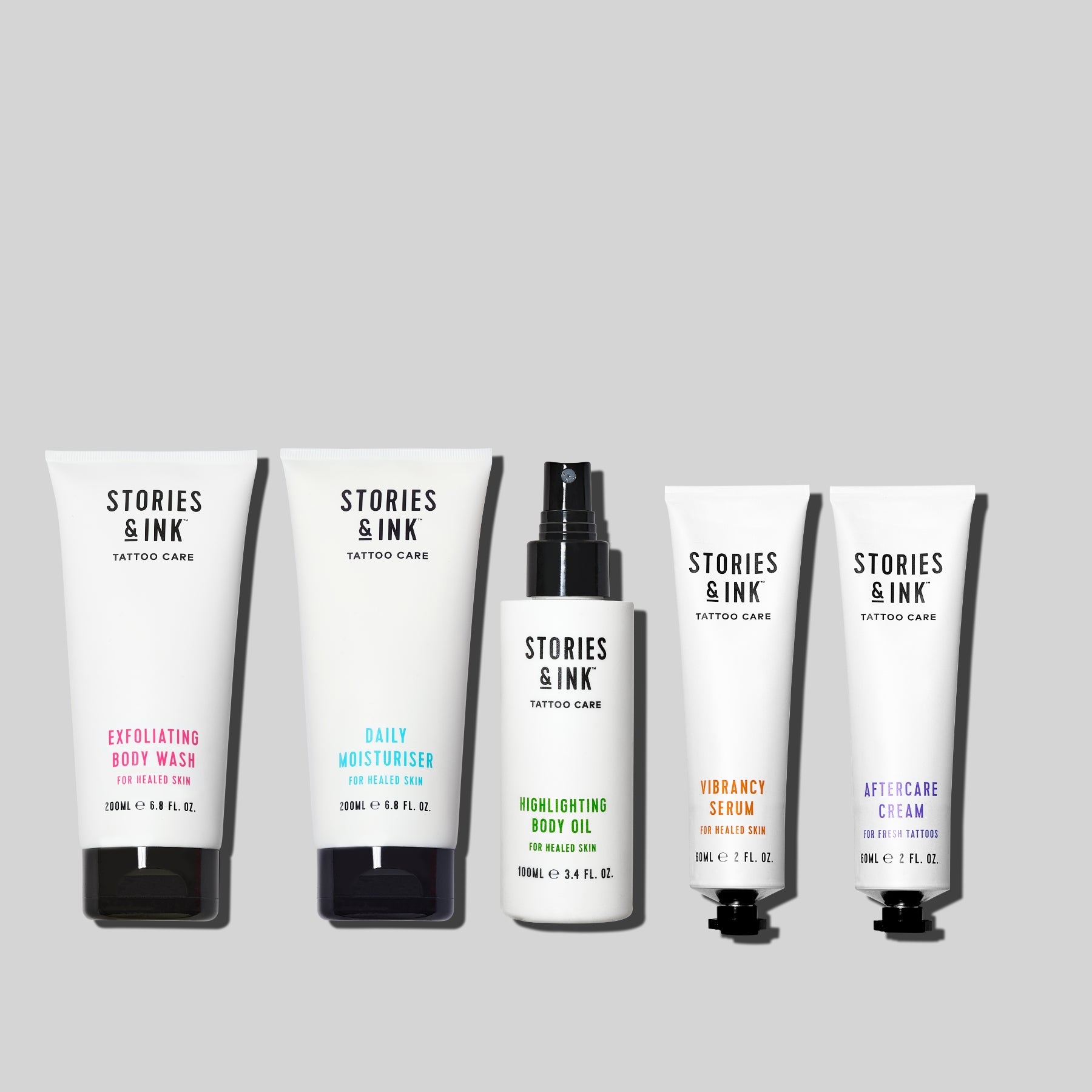
So think in two layers. For everyday, incidental exposure, our Daily Tattoo Moisturiser hydrates healed ink and includes low-level chemical UV filters for exactly this kind of background sun. To be completely clear: that is not a substitute for sunscreen. In direct, deliberate sun, broad-spectrum SPF goes on top, every time. Daily filters for daily life, real SPF for real sun.
Sunbeds: the fast-forward button on fading
Tanning beds are UVA-heavy by design, which means they aim the exact deep-penetrating rays that break pigment down straight at your dermis, at close range, on a schedule. On fresh ink they're completely off the table, and on healed ink they'll age your tattoos faster than almost anything else you can do voluntarily. If the tan matters that much, fake it.
Already lost some vibrancy?
Straight answer: nothing in a bottle rebuilds pigment that UV has already removed, and anyone claiming otherwise is selling you something. What you can do is stop the slide and get the most out of what's there. Daily SPF halts further damage. Healthy, hydrated, gently exfoliated skin makes the ink underneath read sharper and brighter, which is exactly what our Vibrancy Serum is built for on fully healed skin, with a vitamin C derivative (Sodium Ascorbyl Phosphate) working on tone and radiance overnight. And for a piece that's genuinely lost its edges, a touch-up with your artist plus proper SPF afterwards is the honest fix.
Frequently asked questions
Can you put sunscreen on a new tattoo?
No. A new tattoo is an open wound for the first 2 to 3 weeks, and sunscreen isn't formulated for broken skin: it can irritate, clog and interfere with healing. Until every bit of flaking, scabbing and redness has fully subsided, protect the tattoo with shade and loose clothing, and stick to your fragrance-free aftercare routine.
How long after a tattoo can you go in the sun?
Wait until the tattoo is fully healed: roughly 2 to 3 weeks, once all swelling, redness, itching, flaking and scabbing have completely settled. Even then, ease in with broad-spectrum SPF 30 to 50 on the piece and avoid long deliberate sunbathing sessions in its first summer.
What SPF should I use on my tattoos?
Broad-spectrum SPF 30 to 50. Broad-spectrum matters most because it covers UVA, the deep rays that break pigment down, as well as UVB. SPF 30 blocks around 97 percent of UVB and SPF 50 around 98 percent, so consistency and reapplication every two hours matter far more than chasing bigger numbers.
Is mineral or chemical sunscreen better for tattoos?
Both protect healed tattoos well. Mineral SPF (zinc oxide, titanium dioxide) is gentle but can leave a white cast that temporarily dulls how bold the ink looks. Chemical SPF finishes invisibly and is easier to reapply over large pieces. The best choice is whichever broad-spectrum formula you'll genuinely reapply.
Do black tattoos fade in the sun?
Yes, everything fades in the sun. Black is the most stable tattoo pigment, so it holds up better than colour, but repeated UV exposure still breaks it down and shifts solid blacks towards grey over the years. Consistent SPF is what keeps blackwork looking dense and sharp long term.
Can you tan with tattoos?
On fully healed tattoos, yes, but understand the trade: a tan is sun damage, and every unprotected session ages your ink a little. If you tan, use broad-spectrum SPF on the tattooed areas and reapply properly. On fresh, unhealed tattoos, no sun and no tanning at all.
Do tanning beds fade tattoos?
Yes, faster than natural sun. Sunbeds deliver concentrated UVA, the exact wavelength that penetrates the dermis and breaks tattoo pigment apart, at close range. Never expose a fresh tattoo to a sunbed, and if you care about your healed work staying vibrant, keep it away from them entirely.
Does sun through windows or on cloudy days fade tattoos?
Over time, yes. UVA passes through window glass and cloud cover, which is why forearms, hands and driving-side arms often fade first without a single sunburn. That's the case for daily habits: everyday UV protection on exposed ink, with proper broad-spectrum SPF whenever you're deliberately out in the sun.
Stories & Ink is a UK tattoo skincare brand: fragrance-free, vegan aftercare for fresh tattoos, and a dedicated Maintenance range that keeps healed ink vibrant. Artist-approved and used by studios and collectors worldwide. Questions? info@storiesandink.com