


Leave second skin on a tattoo for 3 to 5 days in most cases. Some artists use a two-stage method: a first piece for the first 24 hours, then a fresh piece for another 3 to 6 days. Always follow your artist's instructions, and remove it early if it leaks, lifts or irritates your skin.
If you got tattooed recently, chances are you walked out of the studio wrapped in what looks like cling film's high-tech cousin instead of the old paper towel and tape. That's second skin: the clear adhesive film that's become the standard way studios send fresh ink home. Saniderm, Dermalize, Tegaderm, "the film", whatever your artist calls it, it's all the same idea.
It's a genuinely brilliant bit of kit. It's also the source of about a thousand panicked 2am questions, usually involving the phrase "there's a bag of ink hanging off my arm". So here's everything you need to know: how long it stays on, what's normal underneath it, how to get it off without swearing, and exactly what your tattoo needs the moment it's gone.
Key takeaways
- Most artists advise wearing second skin for 3 to 5 days. Two-stage protocols swap in a fresh piece after the first 24 hours.
- The dark fluid pooling under the film (the "ink sac") is normal. It's plasma, lymph and excess ink, not your tattoo escaping.
- Remove it early if the seal breaks, water gets in, or you get a red, itchy rash spreading beyond the tattoo.
- Take it off in a warm shower, peeling slowly back over itself. Never rip it off dry.
- The moment it's off, the real aftercare starts: gentle fragrance-free cleansing plus a thin layer of aftercare cream, 2 to 3 times a day for 2 to 3 weeks.
What is second skin, exactly?
Second skin is a thin, breathable, waterproof polyurethane film with a medical-grade adhesive. It's the same technology hospitals use over wounds and IV sites, adapted for tattoos.
While it's on, it does three jobs at once. It locks in the plasma your body produces (which is packed with the proteins your skin uses to repair itself), it keeps bacteria, friction and grubby bedsheets out, and it means no scabbing to pick at during the most vulnerable days. Tattoos healed under film typically scab less and peel lighter than tattoos healed the old-school way.
How long should you leave second skin on a tattoo?
The standard answer is 3 to 5 days for a single application. Long enough for the surface of the skin to close, short enough that the adhesive doesn't overstay its welcome.
Some studios run a two-stage protocol instead: the first piece comes off after 8 to 24 hours (when weeping is heaviest), the area gets a gentle wash, and a fresh piece goes on for another 3 to 6 days. Film manufacturers' own guidance follows this pattern too.
Two rules override everything above:
- Your artist's instructions win. They know how you bled, how saturated the piece is, and what they wrapped you with.
- Never exceed about 6 days total. Past that point the film is collecting more grime than it's blocking.
The ink sac: why your tattoo looks like it's melting
Within the first day or two, fluid usually pools under the film. It can look murky, dark, frankly a bit horrifying, like your tattoo is leaking out of your body. It isn't.
That fluid is plasma and lymph mixed with the excess ink that didn't take in the skin. Your tattoo's actual ink sits in the dermis, well below all of this. The sac is a sign the film is doing its job: sealed, sterile, letting your body get on with it. Small sacs can be left alone until removal day.
When the ink sac is a problem: if the film is leaking at the edges, if the seal has clearly broken, or if the fluid turns thick, cloudy or smells off, remove the film, wash the tattoo gently, and switch to open healing. And if you spot spreading redness, heat, swelling or discharge, read our guide on how to know if your tattoo is infected and speak to a professional.
When to take second skin off early
Don't white-knuckle it to day 5 if any of these show up:
- The seal breaks or lifts and air or water gets underneath. A broken seal doesn't protect, it incubates.
- Heavy leaking from the edges that a quick press-down doesn't fix.
- An adhesive reaction: red, itchy, bumpy skin spreading beyond the outline of the film. Some people are simply sensitive to the adhesive. Off it comes, no debate.
- It's been 6 days. Time's up regardless.
Coming off early isn't a failure. Plenty of flawless tattoos heal open from day one. You'll just start the wash-and-cream routine below a few days sooner.
How to remove second skin without the drama
Ripping it off dry is how you end up tugging at exactly the skin you're trying to protect. Do it like this instead:
- Get in a warm shower. Warm water softens the adhesive and makes the whole thing civilised.
- Find an edge and peel it back over itself, low and slow, in the direction of hair growth. Pull the film back across the skin, not straight up away from it.
- Let the water run between film and skin as you go. A little fragrance-free soap along the peeling edge helps break the adhesive.
- Wash the tattoo gently once the film is off, clearing any dried plasma and residue.
- Pat dry with clean paper towel and let it air for a few minutes. No rubbing, no bath towels.
What to do after removing second skin
This is the moment that decides how the rest of your heal goes. The film protected your tattoo through the messy days; now your skin needs cleansing and moisture to finish the job. The routine:
Wash, morning and night. Use lukewarm water and a gentle, fragrance-free wash like the Aftercare Foam Cleanser. It clears residue and dried plasma without stripping healing skin, with Bulbine Frutescens to support recovery. Clean hands only.
Cream, 2 to 3 times a day. A thin layer of the Aftercare Cream: fragrance-free, vegan and non-occlusive, built on three calming actives (Bisabolol, Panthenol and Cardiospermum Halicacabum) that soothe irritation while your skin repairs. Thin means thin. As resident Stories & Ink tattooist Frances Barton puts it: "It's about finding the right balance: too much moisture can cause bubbling and moisture spotting, while too dry will result in itchy and irritable scabbing."
Both together are the Tattoo Aftercare Duo, which exists for precisely this moment.
Keep the usual rules for the next 2 to 3 weeks: loose clothing, no swimming or soaking (here's why), no sun, no picking. Film-healed tattoos often skip the heavy scab stage, but expect light flaking and the itchy phase. That's normal. Moisturise through it.
When is the tattoo actually healed?
Roughly 2 to 3 weeks after your session, once all swelling, redness, itching, flaking and scabbing have fully subsided. The surface heals first; the deeper layers take longer, so if in doubt, give it a few extra days.
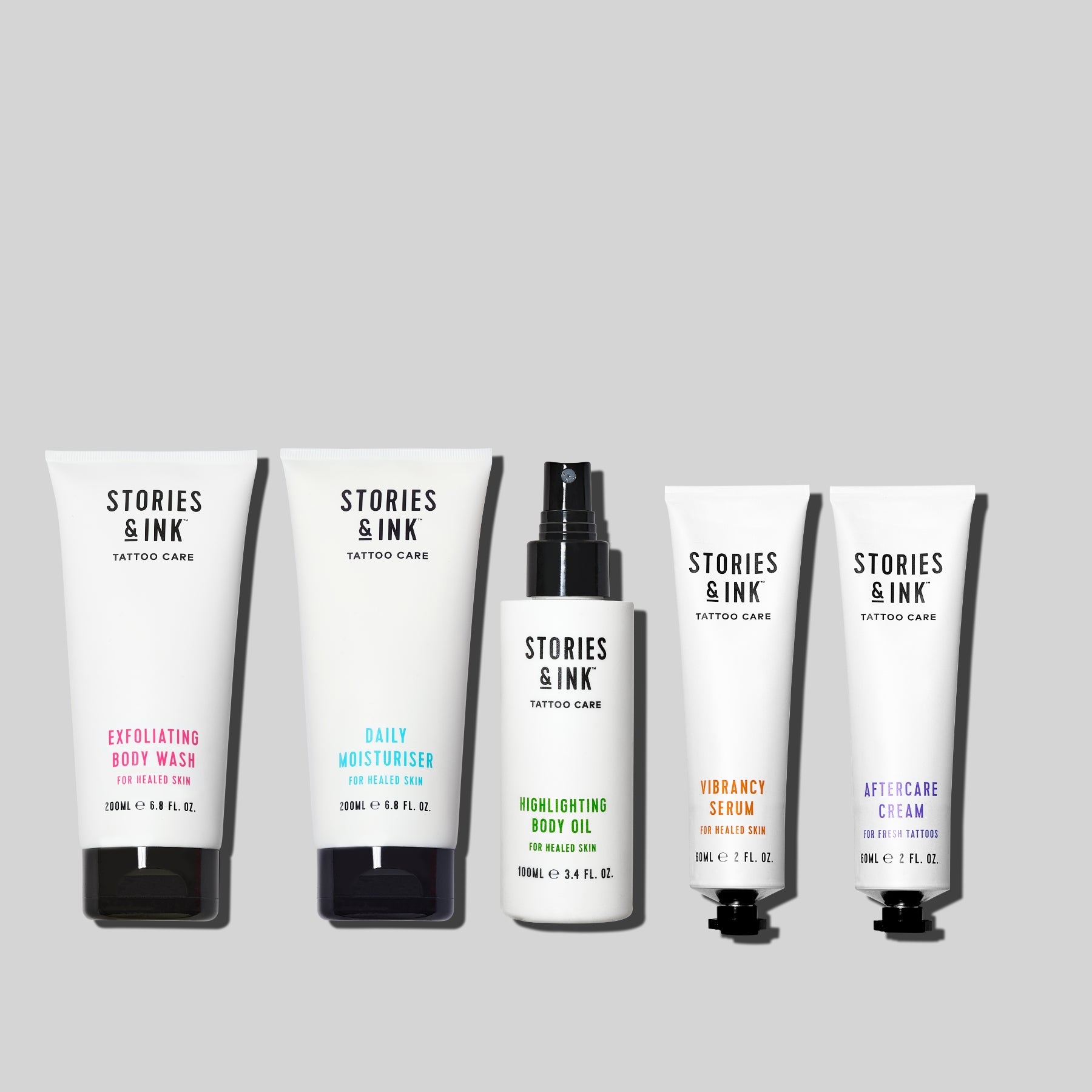
Once you're there, the job changes from healing to keeping it vibrant. That's when the Maintenance range takes over: the Daily Tattoo Moisturiser for everyday hydration with low-level UV filters, and the Vibrancy Serum overnight to bring out contrast. These are fragranced and made strictly for healed skin, so they wait until your tattoo is genuinely done healing. For the full journey, read the complete guide to tattoo aftercare.
Frequently asked questions
How long do you leave second skin on a tattoo?
3 to 5 days for a single application is the standard advice. Some artists use a first piece for the first 24 hours, then a fresh piece for another 3 to 6 days. Follow your artist's specific instructions, never exceed about 6 days total, and remove it early if it leaks, lifts or irritates your skin.
Can I shower with second skin on?
Yes. The film is waterproof, so normal, reasonably quick showers are fine. Avoid long hot showers, baths, swimming pools, hot tubs and the sea: prolonged soaking and pressure can break the adhesive seal, and once water gets underneath, the film needs to come off.
What is the liquid under my second skin?
It's plasma and lymph mixed with excess ink, often called the ink sac. It looks alarming but it's a normal part of healing and it isn't your tattoo fading or leaking out. Only worry if the film is leaking, the fluid turns thick or foul-smelling, or the skin around it becomes hot, swollen or increasingly red.
Do I put anything on my tattoo while the film is on?
No. Nothing goes under or on top of second skin: no cream, no ointment, no lotion. The film manages moisture on its own. Aftercare products start the moment the film comes off, beginning with a gentle fragrance-free wash and a thin layer of aftercare cream.
What do I put on my tattoo after removing second skin?
Wash it with lukewarm water and a fragrance-free cleanser, pat dry with clean paper towel, then apply a thin layer of fragrance-free, non-occlusive aftercare cream. Repeat the cream 2 to 3 times a day for 2 to 3 weeks, until all flaking, itching and redness have fully subsided.
Can I reapply second skin myself?
Only if your artist told you to and gave you (or recommended) fresh film. Reapplication needs a clean wash, completely dry skin and clean hands, and it should only ever be a new, sterile piece. If you're unsure, don't: switching to open healing with a cleanser and cream routine is always a safe option.
Is it normal for second skin to itch?
Mild itching under the film is common as the skin knits together. What's not normal is a red, bumpy, itchy rash spreading beyond the edges of the film, which suggests a reaction to the adhesive. If that happens, remove the film gently in a warm shower and continue with open healing.
Does second skin make tattoos heal better?
Used correctly, film healing protects the tattoo during its most vulnerable days: it keeps bacteria and friction out, locks in the body's own plasma, and usually means less scabbing and lighter peeling. It isn't magic, though. The 2 to 3 weeks of cleansing and moisturising after removal matter just as much.
Can I exercise with second skin on?
Light exercise is fine, but heavy sweating is the enemy of the adhesive seal, and gyms are not famously sterile places. Give it a few days if you can, keep the area away from shared equipment, and if sweat lifts the edges or breaks the seal, remove the film and switch to open healing.
Stories & Ink is a UK tattoo skincare brand: fragrance-free, vegan aftercare for fresh tattoos, and a dedicated Maintenance range that keeps healed ink vibrant. Artist-approved and used by studios and collectors worldwide. Questions? info@storiesandink.com